Market Positioning
This opportunity sits in the Southeast European pharmaceutical manufacturing and generics market, where competition is led by a small number of established regional players with strong local distribution, manufacturing footprints, and export capabilities. Based on the deal materials, the most relevant benchmark companies are Hemofarm, Galenika, Zdravlje, Alkaloid, Sopharma, Bosnalijek, and Krka. These are the peer companies used in the project’s own benchmark analysis.
From an investor perspective, this is not a “blank-sheet startup.” It is better understood as a revitalization / relaunch of a legacy pharma manufacturing platform entering a market that already supports profitable regional incumbents.
Main Competitor Groups
1. Local Serbian incumbents
The most direct competitors are the established Serbian manufacturers:
- Hemofarm
- Galenika
- Zdravlje
These companies are important because they compete in the same geography and benefit from local market familiarity, local production economics, and established commercial relationships. The project materials explicitly position the target as comparable to these manufacturing-focused businesses.
What matters to investors is that these are not weak benchmarks. Several are owned by larger international groups:
- Hemofarm is owned by STADA
- Galenika is owned by EMS
- Zdravlje is owned by Allergan according to the materials
That matters because it validates the region: strategic buyers and large pharma groups have already deployed capital in this market.
2. Regional Balkan / Southeast European manufacturers
The broader regional peer set includes:
- Alkaloid
- Sopharma
- Bosnalijek
- Krka
These businesses show that the Balkan and nearby CEE pharmaceutical market can support companies with:
- healthy revenue growth,
- double-digit EBITDA margins in many cases,
- export-oriented operating models,
- and, in some cases, public market relevance.
The benchmark included in the deal materials shows:
- Alkaloid recorded strong revenue growth and EBITDA margins around the mid-teens;
- Hemofarm remained profitable with double-digit EBITDA margins;
- Galenika historically posted strong margins, although compressing over time;
- Krka demonstrated especially strong profitability, with EBITDA margins reaching the high-20s in the benchmark years shown.
That is the real investor signal: this is a market where scaled operators can make money.
What Makes This Opportunity Competitive
1. Large manufacturing base in a proven region
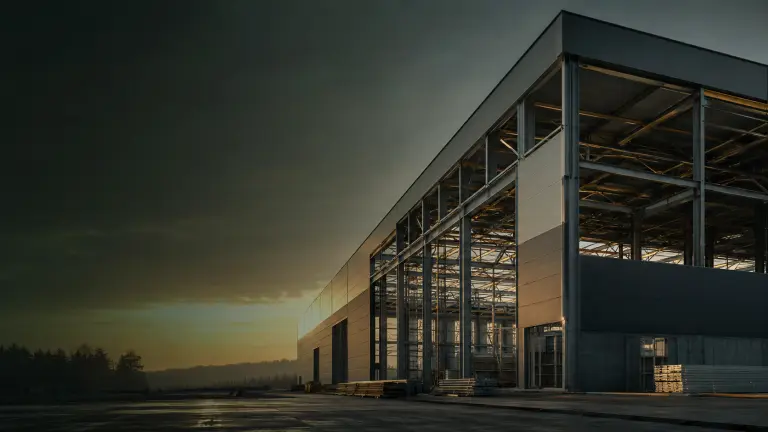
The asset base is a core strength. The company offers a refurbished pharmaceutical production site of roughly 20,000 sqm, including production, warehouse, office, and support space, with clean-room infrastructure already in place.
The materials also describe it as one of the largest capacities in the Balkan region, with planned output potential of:
- 150 million units in solid dosage forms
- 50 million units in semi-solid and liquid products
Against competitors, that matters because scale is one of the main ways to defend margin in generics and contract manufacturing.
2. Lower-cost manufacturing jurisdiction with EU adjacency
One of the clearest arguments in the materials is the Serbia production advantage:
- relatively cost-effective manufacturing,
- proximity to EU markets,
- reduced dependence on Asian imports,
- stronger supply security for European pharma customers,
- and policy support for local production.
TADA’s acquisition of Hemofarm as a case study shows how international pharma groups used Serbia to improve cost efficiency and expand regional reach.
For investors, that is one of the strongest points of the deal: this is not a speculative geography; it is a location already validated by strategic capital.
3. Multi-revenue model, not single-product risk
A major competitive advantage versus a typical small pharma bet is diversification. The planned business model has seven revenue streams, including:
- food supplements,
- licensing / generic products,
- own-branded prescription products,
- tenders,
- third-party manufacturing,
- export of an existing product,
- rental income from unused capacity.
That is important because many smaller pharma opportunities depend on one or two products or one regulatory outcome. This one is structured to have several routes to monetization.
4. Existing product base and portfolio expansion potential
The company is not starting with zero commercial assets. According to the materials, it already has:
- 15 food supplement products on the market,
- a plan to obtain licenses for more than 70 generic drugs over time,
- and an own-branded prescription portfolio of 21 medicines / 14 INNs in the plan.
Relative to competitors, this supports a hybrid strategy:
- start with lower-complexity, faster-to-market products,
- then scale into higher-value prescription and manufacturing segments.
That staged rollout reduces early execution risk.
5. Embedded asset support
From an investor standpoint, a big part of the downside case is asset backing. The fixed asset valuation found fair value of property, plant and equipment of about €35.9 million, including land, buildings, and equipment.
The deal materials also note that the balance sheet contains significant hidden reserves due to the gap between book values and updated asset valuation.
That does not remove execution risk, but it does improve the capital story relative to pure-technology or pure-commercial pharma plays with limited hard assets.
Why Investors May Prefer This Opportunity to Competitors
Better entry point
Most established competitors are already mature businesses. This opportunity is earlier-stage operationally, which means investors may be entering before full production ramp-up and before certification-driven valuation uplift.
That is the classic appeal:
- competitors are proven but already priced,
- this platform may offer re-rating potential if execution succeeds.
Public-markets upside with private-style value creation
The project combines:
- a public-market structure,
- asset-backed downside support,
- and a private-equity style operational turnaround / build-up case.
That is unusual. The company is being introduced through a listed platform, which gives the deal transparency, potential liquidity, and future market visibility that many private regional pharma deals do not offer.
Clear path to value inflection
The main value-creation milestones are concrete:
- finish refurbishment,
- secure Serbian GMP steps,
- complete EU-GMP process,
- restart production,
- launch portfolio,
- move into third-party manufacturing and export expansion.
That gives investors a sequence of identifiable catalysts rather than a vague long-term story.
Investor Takeaway
The strongest way to frame this opportunity is:
This is a scaled, asset-backed pharmaceutical manufacturing relaunch in a region already validated by major strategic players, with meaningful upside if management executes on certification, portfolio rollout, and production ramp-up.
Why it can be attractive:
- competitors prove the market is real,
- large pharma groups have already invested in the region,
- the asset base is substantial,
- the production footprint is large,
- the revenue model is diversified,
- and the entry point is earlier than in mature listed peers.
Why it is not risk-free:
- the company is still pre-full-scale restart,
- regulatory milestones matter,
- and commercial execution must still be demonstrated.




 English
  Polish